
Recycle or sell? An honest guide to which is which
Or email the buying desk: seth@sjwholesalellc.com

Free haul away is free for a reason
A recycler who collects your equipment at no charge is being paid, just not by you. The payment is the equipment. Whatever in that load has reuse or commodity value covers the truck, the labor and the margin, and the rest gets processed. That is a legitimate business and for a lot of loads it is the right one.
It stops being the right one when the load carries the value rather than just covering the truck. A floor of recent laptops, a rack of populated servers, or a pallet of enterprise drives is a load where the difference between free collection and a paid offer is the entire question. The rest of this page is how to tell which load you have.
Equipment that usually holds resale value
Resale value tracks three things: whether somebody still wants to use the item, whether it is complete, and whether there is enough of it to be worth a freight movement. Age matters less than people expect and completeness matters more.
| Category | What holds value | What reduces or removes it |
|---|---|---|
| Business laptops | Current and recent generations, with a solid state drive and serviceable RAM. Docking stations and power supplies that ship with them. | Missing drives, missing keys, swollen batteries, cracked panels. Still resells, at less. |
| Enterprise memory and drives | Registered and ECC memory, enterprise SAS and NVMe drives, drive caddies. Small, dense and easy to ship, which is why they hold up. | Consumer memory sticks pulled from old desktops. Failed drives with no SMART life left. |
| Servers | Rack servers with populated drive bays, rails and caddies. Complete units beat stripped chassis by a wide margin. | Chassis with the drives, memory and rails already pulled. Tower servers past two generations. |
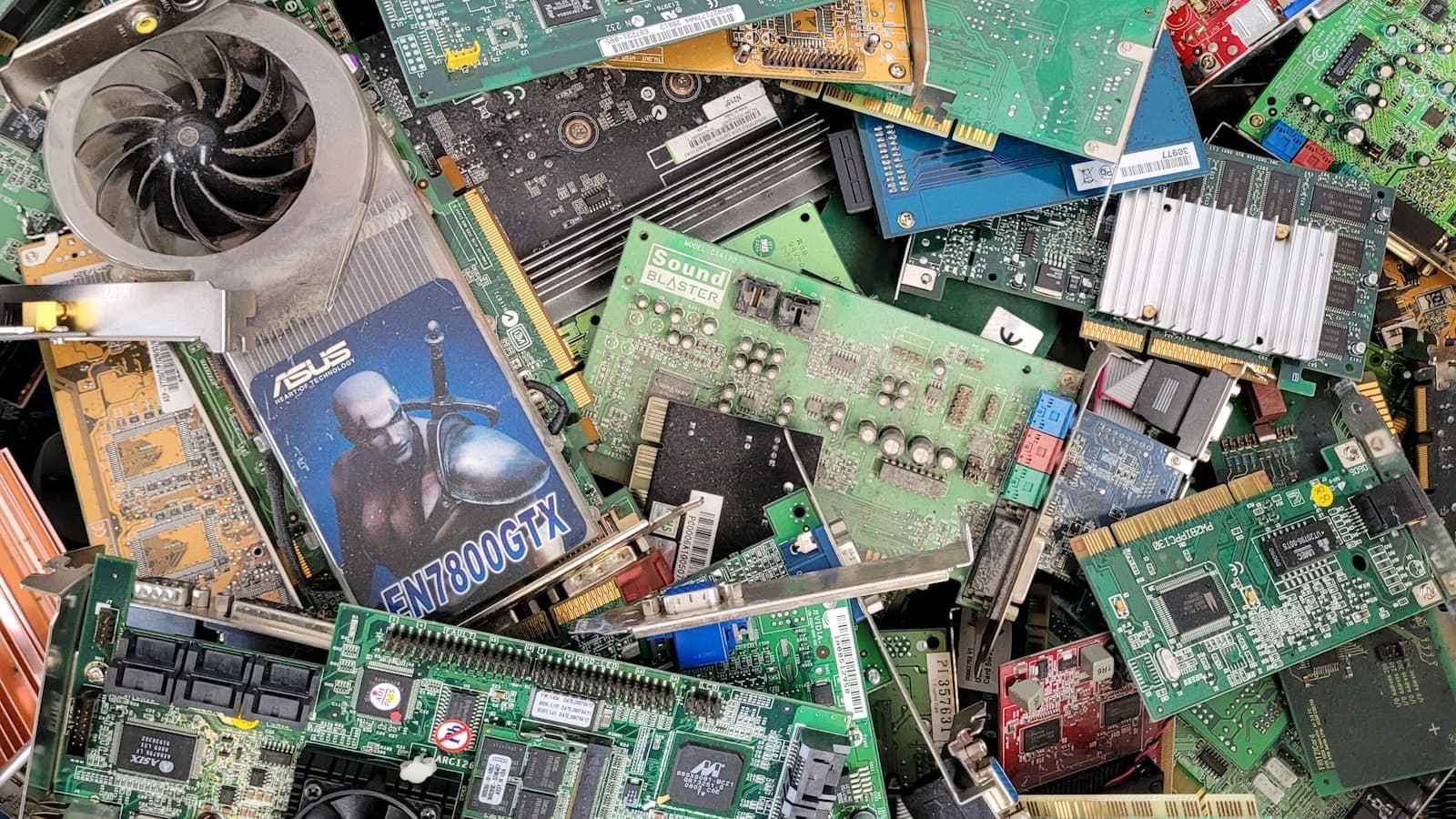
| Graphics cards and accelerators | Workstation and data center cards. This is the one category where a single item in a pallet of otherwise tired equipment can carry the lot. | Integrated graphics. Low-profile display adapters. Anything with a seized fan and no fan header. |
| Desktops and small form factor PCs | Recent business desktops with a drive and memory installed. Uniform fleets, because they can be graded once and sold as a batch. | Anything more than a few generations back. Mixed one-off consumer towers. |
| Phones, tablets and Chromebooks | Unlocked devices, complete fleets, and devices still inside the support window. Chromebooks move even past auto-update expiry. | Carrier locks, activation locks, and enrollment left in place. De-provision before pickup. |
| Monitors and projectors | Flat panels with stands and cables, in volume. Projectors with lamp life remaining. | Single monitors. Cracked panels. Anything that needs a pallet to move one unit. |
Every category we buy is listed here, with a page per category. If your equipment is not in the table, it is worth asking anyway.
Worth money, and genuinely worth nothing
Read the two columns against each other. No buyer will pay you for the right-hand column, and any buyer who says otherwise is quoting a number they intend to revise after the truck arrives. Send the right-hand column to a recycler.
Worth money
- Business laptops from the current and recent generations, complete, with the drive and the charger.
- Rack servers with the drive bays populated and the rails and caddies still in them.
- Enterprise memory and drives: registered and ECC memory, SAS and NVMe, drive caddies.
- Workstation and data center graphics cards and accelerators.
- Business desktops and small form factor PCs, in uniform fleets rather than one-offs.
- Unlocked and de-provisioned phones, tablets and Chromebooks, in whole fleets.
- Flat panel monitors and projectors, moved as a floor rather than as single units.
Genuinely worth nothing
- CRT monitors and CRT televisions. They cost money to move and money to process, and there is no reuse market.
- Inkjet and consumer laser printers, and most multifunction copiers. Service history is unknowable and freight eats any margin.
- Chargers, power bricks, cables, adapters and docking hardware sold on their own.
- Headphones, headsets, keyboards, mice, webcams and desk accessories.
- Uninterruptible power supplies with dead batteries. The battery is the unit and it is a hazardous shipment.
- Networking gear, switches and routers. There is a market for some of it, but it is not our market and we do not buy it.
- Anything visibly water damaged, fire damaged, or stored outdoors.
There is a real exception at scale. A full trailer of any one of these is a commodity movement rather than a resale item, and commodity movements are priced by a different kind of company. We are not that company.
When recycling really is the right answer
Use a recycler or a certified processor, and do not sell, in any of these cases:
- Your policy or your contract names R2v3, e-Stewards or NAID AAA. We hold none of the three and we will tell you so. Here is what each one covers.
- Your auditor requires the processing facility itself to be certified, or requires a certified chain of custody end to end.
- The drives cannot leave the building under any circumstances and cannot be removed either. That is a destruction job, not a sale.
- The equipment is genuinely end of life: it is the list in the section above, and there is nothing in the load that a reuse market wants.
- The quantity is small. A handful of units is not worth anybody arranging freight, and a local recycler or a municipal collection day will be quicker than either of us.
- The equipment is damaged by water, fire or outdoor storage. Nobody reuses it and it needs correct handling rather than a buyer.
If one of these describes your project, tell us and we will say so plainly rather than take the job.
How to decide, in four steps
Step 1. Count it before you sort it.
A rough count by category beats an accurate count you never finish. Model numbers help, serial numbers do not. A spreadsheet, an MDM export or photographs of the pallets is enough.
Step 2. Split the list into three piles on paper.
Computing hardware, everything else, and anything with a drive in it. The first pile is what a buyer prices. The second is what a recycler takes. The third decides your data question before anything is loaded.
Step 3. Settle the data question first.
Keep the drives, wipe them before pickup, or ask about routing the lot through a processing partner. We do not sanitize in house and we do not issue certificates ourselves. Here is exactly what we can and cannot do about the data on the drives.
Step 4. Send the same list to a buyer and to a recycler.
Both quotes are free. If the buyer offer is lower than the cost of the recycler, take the recycler. Getting two numbers is the entire method, and it takes one email.
What we buy, and what we do not
We buy computing hardware: laptops, desktops, servers, storage, monitors, projectors, phones, tablets and Chromebooks. We take mixed grades, including working but cosmetically damaged and non-working stock, because that is exactly the inventory that is hard to place. We do not buy networking gear, switches, routers, chargers, headphones or accessories.
We take the lot as it stands and do not cherry-pick. We arrange the pickup and the freight, and we tell you who pays for what before anything moves.
Common questions
- Does a free recycler ever beat selling?
- Yes, and often. If the lot is old printers, CRTs and accessories, a free haul away is the better outcome and no buyer should tell you otherwise. Free pickup is also worth real money when the alternative is paying a junk removal firm to do the same job.
- Is equipment worth anything if it does not power on?
- Often, yes. A laptop that does not boot still has a panel, a keyboard, memory and a board. We buy non-working and cosmetically damaged units as part of a lot, and we do not ask you to test anything first. What we cannot use is equipment that has been stripped of the parts that carry the value.
- Do I have to sort the good from the bad before I ask?
- No. We do not cherry-pick and we do not ask you to. Send the whole list, including the equipment you already assume is worthless, and we will tell you which parts of it we are pricing.
- What if half the lot is worth something and half is not?
- That is the normal case. We take the mix rather than the best of it, which is the point of selling to one buyer instead of three. How the offer is built is set out on the main sell page.
- Should I strip the drives out before pickup?
- You can, and some policies require it. Understand the trade: a laptop with the drive removed is worth less than the same laptop with the drive in it, and a server with the bays emptied is worth a lot less. If your policy allows a wipe instead of a removal, that usually leaves you better off. Our data handling page states what we do.
Send a list, get an offer
Send a list. We come back inside 24 hours with a written offer.
Get an offer
Send a list. We come back inside 24 hours.