

Data center decommissioning: we buy the hardware out of the room
- 24 hoursFrom room list to written offer
- 7 daysThe offer stays open
- 48 hoursShortest collection lead time
Or email the buying desk: seth@sjwholesalellc.com
What comes out of a decommission
A room being handed back holds more than the compute. Here is what we bid on and what we leave. Nothing on this list is a surprise on the collection day, because we mark it up before the window is booked.
We buy
- Rack servers, 1U and 2U, populated or stripped
- Blade chassis, blades and the modules seated in them
- Storage heads, expansion shelves and the drives in them
- Workstations, desktops and laptops from the same site
- Monitors and projectors off the desks and the walls
- Failed units and kit past vendor support, in the same lot
We leave in place
- Switches, routers, firewalls and the optics in them
- Empty cabinets and rails
- PDUs, UPS units and their battery strings
- Copper and fiber cabling
- Chargers, headphones and loose accessories
| How it usually comes out | Do we buy it | |
|---|---|---|
| Rack servers | 1U and 2U, populated or stripped, with or without rails | Yes |
| Blade chassis and blades | Chassis, blades and the modules still seated in them | Yes |
| Storage arrays and shelves | Heads, expansion shelves, and the drives if you leave them in | Yes |
| Workstations, desktops and laptops | Whatever the same site had on desks, in the lab and in the store room | Yes |
| Monitors and projectors | Screens off the desks, screens off the walls | Yes |
| Switches, routers and firewalls | Top of rack, core, edge, plus the optics in them | No. We do not buy networking gear. |
| Cabinets, PDUs, UPS units and cabling | Empty racks, rails, power strips, batteries, copper and fiber | No. The infrastructure stays with you or with the facility. |
Send the asset register and we will mark every line as bidding or leaving, so you know what is still yours to place before you agree anything. For the model level detail on the compute, see servers and storage, and for the desk hardware from the same site see laptops and desktops.
Racked or de-racked, either way
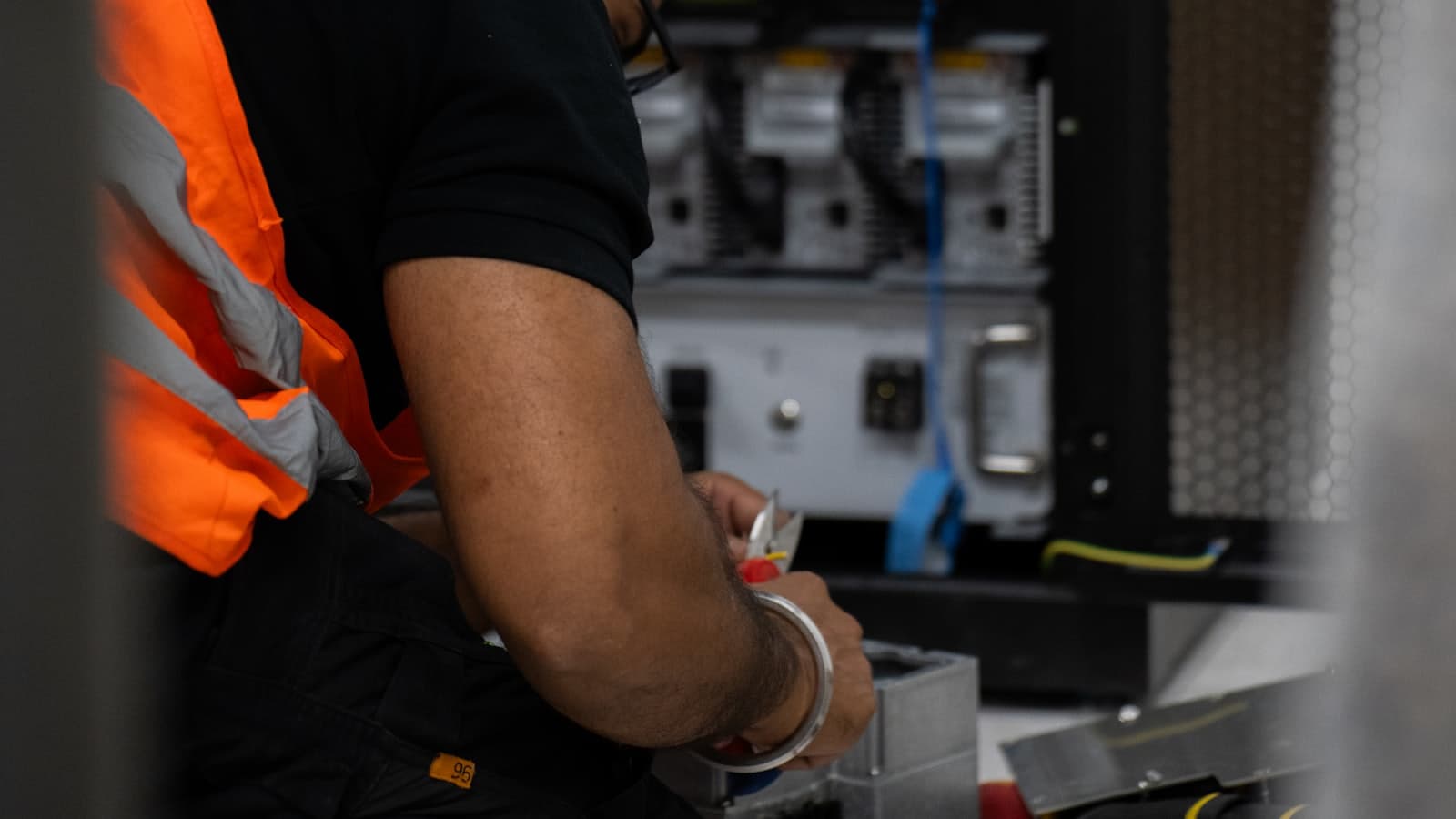
This usually runs one of two ways. Your team pulls the units, stacks them on pallets and we collect pallets. Or the units are still seated in the cabinets on the day and come out then. Tell us which one you are planning when you send the list, because it changes the labor on the floor and the way the freight is booked. Your team de-racks ahead of the window, or the units come out of the cabinets on the collection day with your facilities team present. We do not supply de-racking labor.
The offer is priced off the units, not the cabinets they sit in, so de-racking early does not cost you value. It only moves work from the collection day to the week before. The figure comes back on the whole lot, against current market conditions, in writing, before anything is de-racked.
We take mixed rows. A row of current generation compute next to a row of kit that has been dark for two years is one lot to us, and we take both. No rigid requirements that exclude complex or mixed-grade lots.
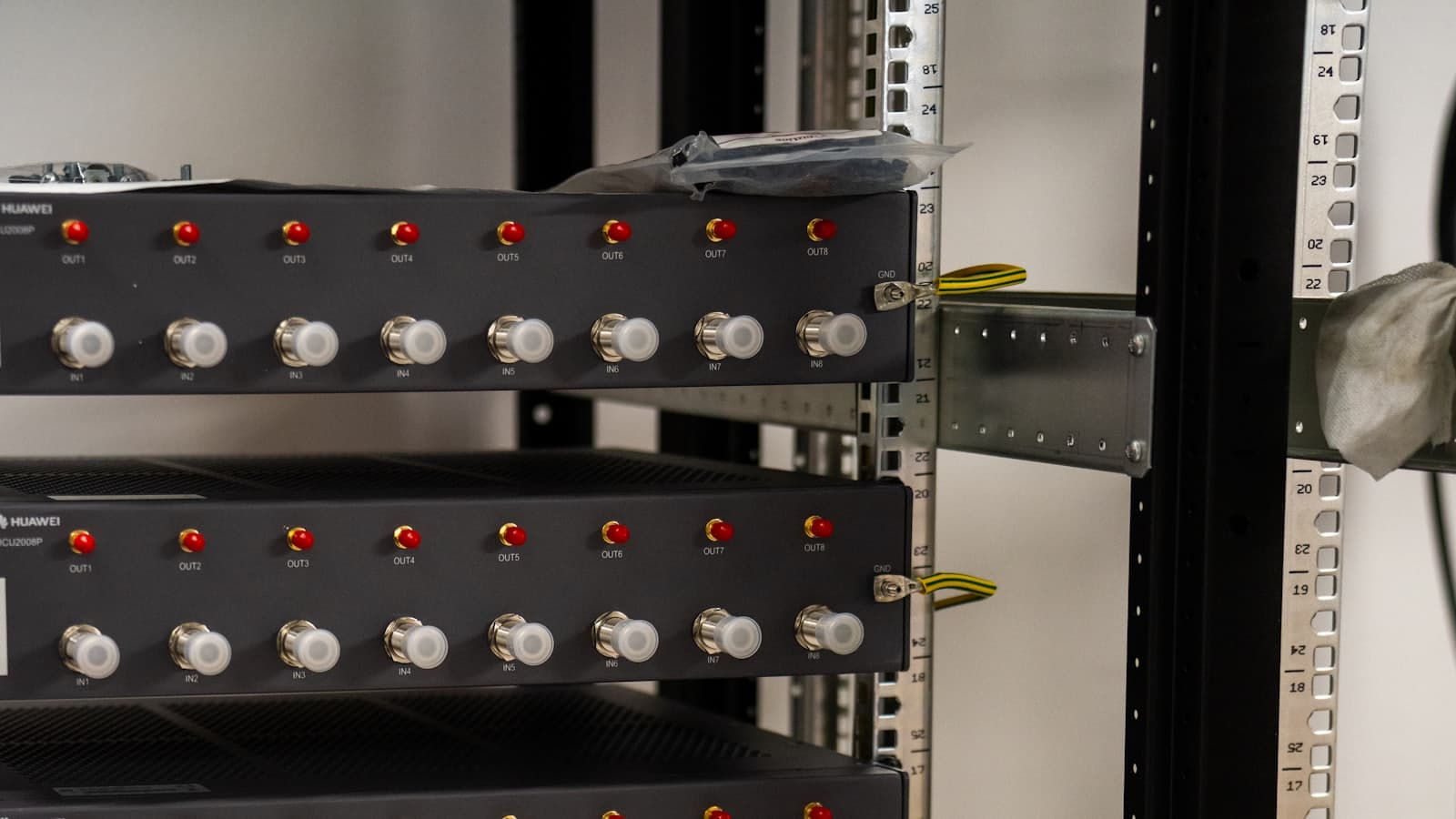
One row, one hall, or a whole site handed back.
We arrange the pickup and the freight, and we pay on agreed terms.
Project timing and phased removal
The hardware is usually the last item on a migration plan and the first one that slips. Time-sensitive deals are our specialty, not a challenge. Start the conversation while the migration is still running, not after the room has gone cold.
- 1
Send the room list early
An asset register export, a rack elevation, a CMDB dump or a spreadsheet. Model, configuration and count is enough. Rough counts are fine while the migration is still running.
- 2
Get a figure for the plan
A written offer inside 24 hours, priced on the whole lot, against current market conditions. It stands for 7 days, which is long enough to clear an approval chain.
- 3
Agree the removal windows
One collection for the whole room, or one per phase as each row comes cold. Tell us the phase dates when you send the list, so the offer covers the project and not just the first row out.
- 4
We collect on the agreed dates
Each window is booked 3 to 5 business days ahead. If a window slips, tell us and we rebook it against the new date.
- 5
You get paid per collection
Settlement by ACH or wire transfer, 3 to 5 business days after verified receipt. Each collection settles on its own, so a phased project does not hold your money to the last row out.
On a phased project the same sequence repeats per window. The dates below are the lead times we hold each phase to.
While the migration is still running
Send the room list with the phase dates on it. We price the whole project once, against every row, rather than repricing each time a rack comes cold.
Inside 24 hours
One written offer covering every phase, priced on the whole lot, against current market conditions, valid for 7 days from the day we send it.
3 to 5 business days before each window
We confirm the carrier, the pallet count and the access paperwork for that phase. A slipped window is rebooked, not repriced.
Each collection day
One truck per phase. You get a written receipt against the list for that phase, not a running total settled at the end.
3 to 5 business days after each verified receipt
That phase is paid by ACH or wire transfer. The last row out does not gate payment on the first.
If the site is an office floor rather than a hall of racks, see closing or downsizing an office instead. If what you are moving is overstock or returned stock rather than deployed kit, see excess inventory and returns.
Loading bays, pallets and the collection day
Tell us the dock height, whether there is a forklift on site, whether the bay needs a liftgate, and how the units get from the hall to the bay. If the room sits above ground level, tell us the goods lift capacity and the booking rules for it. Rack hardware is dense, so a modest unit count can still be a heavy pallet count.
We book the carrier, we supply the pallets and the wrap, and we arrange a liftgate where the building has no dock. We do not operate our own trucks. Loading is the carrier's driver, with the pallet jack or forklift on site where the building has one.
Colocation and shared facilities usually need the collecting driver on an access list ahead of the window, with names and photo identification submitted in advance, and often an escort inside the hall. Send us the facility rules with the list and we will work to them. A certificate of insurance naming your colocation provider or your landlord is available on request. The carrier we book issues the certificate of insurance. Your organization can be named as certificate holder on it, and your building manager can be named alongside you.
We arrange the freight, domestically and internationally. Who pays for what is set out here, and the insurance and settlement terms are on the payment and insurance page.
Drives, arrays and what leaves the building
You have three options and they are all normal. Pull the drives and keep them. Wipe them in place before the collection. Or route the lot through a certified processor. Routing a lot through a certified processor is available on request. We name the processor for that specific job, in writing, before the collection is booked. We do not sanitize in house and we do not issue certificates ourselves. Our data handling page sets out exactly what we can and cannot certify.
Whichever you choose, tell us before the offer is agreed. A storage shelf priced with its drives and delivered without them is a different lot, and we would rather price it correctly once than renegotiate on the dock. If what we receive does not match the list, you get a written discrepancy report, line by line, against the list you sent, and we agree a revised figure before anything moves further. If we cannot agree one, we return the lot to you at our cost, on the original freight terms.
We are not a certified processing facility. Where the hardware goes after we buy it is set out here.
Common questions
- Do you take the whole room, or only the servers?
- We take the computing hardware: servers, storage, workstations, desktops, laptops, monitors, projectors, phones and tablets. We do not take switches, routers, firewalls, chargers, headphones or accessories. Send the room list and we will mark the lines we are bidding on before you commit to a date.
- Can you work to a phased removal schedule?
- Yes. Most decommissioning runs in waves rather than one clean day. Give us the phase dates with the list and we price the whole project, then collect against each window. The shortest window we work to is 48 hours from an agreed offer to a truck at the bay.
- Do you buy failed and end-of-life units?
- Yes. Failed units, units past vendor support, and units nobody wants to power on again, in the same lot as the good ones, regardless of condition, age, or mix. We do not cherry-pick the healthy rows and leave you the rest.
- Do the drives have to stay in the arrays?
- No. That is your call, and it changes the figure rather than the answer. Pull them, wipe them in place, or leave them and tell us. Our data handling page sets out exactly what we can and cannot certify.
- Who arranges the freight?
- We do, in the United States and internationally. On lots of 100 units or more we cover the freight. Below that we agree who pays before you commit, based on the distance. Who pays for what is set out here.
- Are you a certified processing facility?
- No. We are a buyer. We hold no R2v3, e-Stewards or NAID AAA certification, and if your project requires a certified processor we will tell you so. Here is what each certification covers and when you should insist on one.
Send a list, get an offer
Send a list. We come back inside 24 hours with a written offer.
Get an offer
Send a room list, an asset register export or a rack elevation. We come back inside 24 hours with a written offer that stands for 7 days.